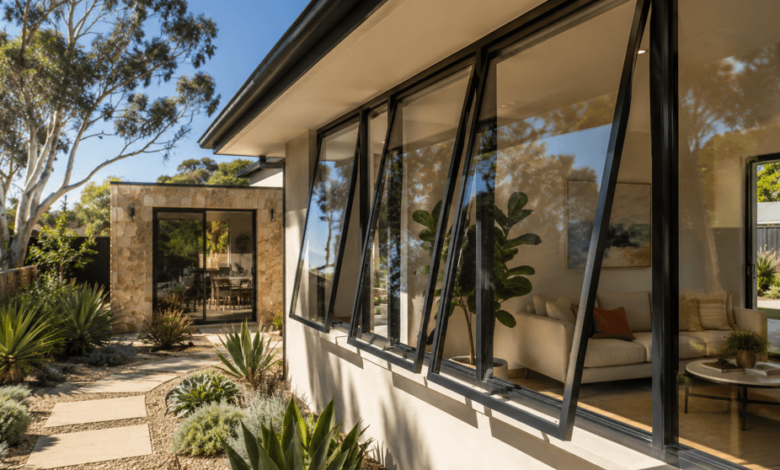
Adelaide’s climate has distinctive long, hot, dry summers with intense solar exposure, and mild winters that still benefit from passive solar gain. Getting windows right in this environment has more practical consequences than in milder climates. The wrong choice means uncomfortable rooms, overworked air conditioning, and energy bills that don’t need to be as high as they are.
Aluminium windows in Adelaide have a strong track record for good reasons, but the full picture involves more than just material selection.
What Adelaide’s Climate Asks of Windows
The big problem is the heat from the sun. When it is summer, windows that face west get a lot of sunlight in the afternoon and that can really make a room hot. Even windows that face north, which are great for keeping us warm in the winter, need to be taken care of so we do not get much sun in the summer.
The second challenge is durability under UV and heat. Materials that perform well in temperate climates can degrade more quickly under Adelaide’s intense summer conditions. Seals fail, finishes fade, and poorly specified hardware can become difficult to operate after a summer or two.
Why Aluminium Works Well in This Climate
Aluminium is dimensionally stable, it doesn’t expand and contract with temperature and humidity changes the way timber does, which means it maintains its operation and seal integrity through Adelaide’s seasonal extremes. It holds up well under UV exposure, doesn’t degrade in the dry heat, and is available in powder-coated finishes that retain their appearance over many years.
Modern thermally broken aluminium systems significantly reduce the historic thermal conductivity concern with aluminium frames. The thermal break, a non-conductive material inserted into the frame profile, reduces the transfer of heat between the inside and outside of the frame, improving the overall thermal performance of the window assembly.
Glazing Choices Matter as Much as Frame Choices
The glass does more thermal work than the frame in most window installations. Low-E coatings, thin metallic coatings applied to the glass surface, reduce the transmission of infrared radiation while allowing visible light through. The right Low-E specification depends on orientation: a south-facing window might benefit from a different coating than a west-facing one.
Double glazing, which has become standard in new residential construction, significantly reduces both heat transfer and condensation. In Adelaide’s context, its summer benefit (reducing heat gain) is at least as significant as its winter benefit.
Orientation, Eaves, and the Full Picture
Even a high-performance window will underperform if it is poorly positioned within a building design. Orientation, eave depth, external shading, and the way windows interact with prevailing summer breezes all play a critical role in determining actual performance in real-world conditions.
For example, appropriately sized eaves can dramatically reduce direct solar exposure during peak summer months while still allowing lower-angle winter sun to enter and warm interior spaces. Similarly, window placement that supports cross-ventilation can reduce reliance on air conditioning during milder periods.
Working with a supplier, architect, or builder who considers these factors as part of a holistic design approach, rather than focusing solely on product specification, tends to produce significantly better long-term outcomes in Adelaide’s demanding climate.