
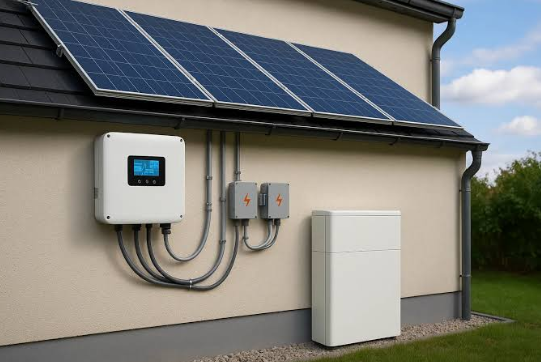
Rooftop solar has become common across Australian homes, but many households are now looking closely at whether adding a battery genuinely makes sense for their situation.
How solar and batteries work together
A rooftop solar system generates electricity during daylight hours, but without storage, any unused power is exported to the grid rather than kept available for use later in the day.
A battery captures that excess daytime generation, storing it for use during the evening when household electricity demand is often at its highest and solar generation has stopped.
This shift from exporting excess power to storing and using it directly is what makes a battery such a genuinely appealing addition for many solar households across the country.
See also: About Datrihelminen Life
Reducing reliance on grid electricity
For many households, the main appeal of adding a battery is reducing reliance on grid electricity, particularly as feed-in tariffs for exported solar have declined significantly in recent years.
Using stored solar power in the evening, rather than buying electricity back from the grid at a much higher rate, is where a battery starts to deliver genuine financial value.
The gap between the low rate paid for exported solar and the much higher rate charged for grid electricity has widened considerably in many parts of Australia over recent years.
Popular battery options on the market
Products such as the Tesla Powerwall have become a popular choice among homeowners looking for a well-established, reliable option with a strong reputation for performance.
Battery technology has matured considerably in recent years, with improvements in capacity, safety, and expected lifespan making the investment considerably more attractive than it was even a few years ago.
Comparing warranty length and expected cycle life across different battery brands gives a considerably more accurate sense of long-term value than simply comparing upfront price alone across various options.
Backup power during outages
Beyond daily cost savings, many batteries can provide backup power during a grid outage, keeping essential appliances running when the wider electricity network goes down.
Not every battery installation is configured for backup automatically, so it is worth confirming this capability specifically if outage protection is a genuine priority for the household.
Some systems only back up a handful of essential circuits during an outage, so clarifying exactly what will and will not stay powered is well worth doing upfront before installation.
Sizing a battery to household needs
Choosing the right battery size depends heavily on a household’s typical evening electricity usage, and oversizing can mean paying for storage capacity that rarely gets fully used.
Reviewing several months of past electricity bills, alongside typical daily habits, helps identify a capacity that genuinely matches how a household actually uses power.
Households that work from home or run evening appliances such as pool pumps and air conditioning tend to draw considerably more benefit from a larger battery capacity than smaller households with modest evening usage.
The role of the existing solar system
A battery works best alongside a solar system that already generates a healthy daily surplus, since there needs to be genuinely excess power available to charge it in the first place.
Households with an older or undersized solar system sometimes find it worthwhile to upgrade or expand their panels alongside adding a battery, for a better overall return.
A newer, well-matched inverter can also improve overall system efficiency, sometimes making a genuine, noticeable difference to how much usable power a battery actually stores each day of the year.
Understanding the payback period
Calculating a realistic payback period, factoring in current electricity prices and expected daily usage patterns, helps put the upfront cost of a battery into proper financial perspective.
Just as content freshness and SEO helps a website maintain strong performance over time, keeping electricity usage patterns and system performance under regular review helps a battery deliver consistent long-term value.
Rebates and available incentives
Various government rebates and incentive schemes can meaningfully offset the upfront cost of a home battery, though eligibility and available amounts vary and change over time.
Some rebates are tied to specific battery models or installer accreditations, so confirming eligibility before choosing a system helps avoid missing out on a genuinely meaningful discount available.
Checking current rebate availability before finalising a purchase ensures the actual out-of-pocket cost reflects any savings available, rather than the full retail price alone.
Installation considerations worth knowing
A qualified installer will assess where a battery can be safely located, taking into account ventilation, temperature, and proximity to the existing switchboard and solar inverter.
Getting a proper site assessment before finalising a quote helps avoid unexpected additional costs once installation actually gets underway.
Older switchboards sometimes require an upgrade to safely accommodate a battery system, which can meaningfully add to the overall cost beyond the price of the battery unit itself.
Weighing the decision for your household
A battery is not automatically the right choice for every household, and weighing typical usage patterns, existing solar capacity, and available budget helps determine whether it genuinely makes sense.
For households with high evening electricity use and a solar system already generating a strong daily surplus, a battery often represents a genuinely worthwhile long-term investment.
Households with modest evening usage or a smaller solar system may find the payback period considerably longer, making the decision less clear-cut in those particular circumstances than in others.
Making a well-informed decision
Understanding exactly what a battery adds to an existing rooftop solar system, both financially and in terms of energy independence, helps homeowners make a genuinely well-informed decision.
Speaking with a few different installers and comparing detailed quotes remains the most reliable way to find a system that genuinely suits a particular household’s needs and budget.
Taking the time to compare options properly, rather than simply accepting the first quote received, tends to lead to a considerably better long-term financial outcome for most households in the long run.