
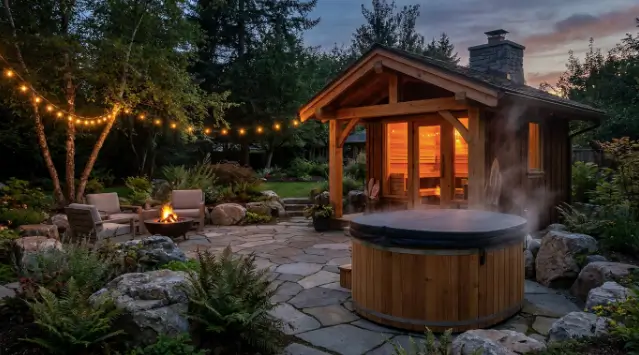
Cedar and heat-treated hemlock are the two dominant wood choices for sauna kits, and the short answer is that cedar offers better natural rot resistance and a stronger aroma at a 15 to 30 percent price premium, while heat-treated hemlock delivers nearly comparable heat performance and durability, especially indoors, at a lower cost. Neither wood is a wrong choice. The right one depends on whether the kit sits outdoors year-round in a wet climate, how much the resinous cedar scent matters to the buyer, and how tightly the budget is set.
What’s the Real Price Difference Between Cedar and Hemlock Kits?
At the same footprint and heater specification, a cedar kit typically runs 15 to 30 percent more than the heat-treated hemlock equivalent. Part of that gap comes from cedar’s higher raw material cost, and part comes from grading: clear, low-knot cedar costs meaningfully more than standard-grade cedar with visible knots, while hemlock grading spreads matter less to price. A buyer comparing two kits that look similar in photos should check the wood grade specifically, not just the species name, since “cedar” alone covers a wide price range depending on grade. Lining up listed prices and grade specs side by side is the fastest way to see whether a price gap reflects real material differences or just marketing, and buyers who want to see both wood options priced out can compare models here before deciding.
How Do the Two Woods Handle Heat and Moisture Differently?
Both species were selected for sauna use because they tolerate repeated heat and moisture cycling without warping much, which rules out most other common construction lumber. Cedar has a naturally low density and contains oils that help it resist moisture absorption on its own. Heat-treated hemlock achieves similar moisture resistance through a manufacturing process, not a natural property, where the wood is heated to high temperatures in a controlled kiln, which alters its cell structure and reduces its capacity to absorb and hold water. In practice, both perform comparably well inside a properly ventilated cabin, and the difference shows up mainly in edge cases: prolonged outdoor wet exposure favors cedar, while hemlock’s treatment process gives it more dimensional stability in some manufacturers’ testing.
Does One Wood Smell or Off-Gas More Than the Other?
Cedar has a distinct, resinous scent that intensifies when the wood heats up, and this is one of the most polarizing differences between the two species. Some buyers consider the aroma part of the sauna experience and specifically choose cedar for it. Others, particularly anyone sensitive to strong scents, find it overwhelming in a small enclosed space and prefer hemlock’s much lighter, more neutral smell. Neither wood should have a chemical or synthetic off-gassing odor if properly kiln-dried and left unfinished on interior surfaces; any strong chemical smell, as opposed to a natural wood scent, is usually a sign of a coating or treatment that should not be on interior sauna surfaces in the first place.
Which Wood Resists Mold and Rot Better Outdoors?
For an outdoor kit exposed to rain and humidity swings, cedar generally has the edge in raw rot resistance thanks to its natural oil content, which is part of why cedar has been the traditional choice for decades of outdoor sauna building. Heat-treated hemlock closes much of that gap through its manufacturing process, and modern heat-treated hemlock kits hold up well outdoors when the exterior siding gets a breathable sealant on a normal maintenance schedule. In a covered or partially sheltered outdoor spot, the practical difference between the two narrows considerably, since consistent maintenance matters more than species at that point.
How Does Weight and Panel Thickness Compare?
Heat-treated hemlock tends to run slightly lighter than cedar at the same panel thickness, which shaves a small amount of effort off solo DIY assembly, particularly when lifting roof panels into place alone. The difference is not dramatic enough to be the deciding factor for most buyers, but it is worth noting for anyone assembling a larger kit without a second set of hands, where every few pounds per panel adds up over a full day of lifting.
Which One Holds Up Better Over a Decade of Use?
Both woods, properly maintained, commonly reach 15 to 20 years of service life in a sauna kit. Cedar tends to gray more gracefully outdoors and holds its structural integrity well even if exterior resealing lapses for a season or two. Heat-treated hemlock depends somewhat more on staying current with exterior maintenance outdoors, since its treatment process, while effective, is not quite as forgiving of neglect as cedar’s natural oils. Indoors, where UV and rain are not factors, the long-term difference between the two is minor enough that most buyers would not notice it without a side-by-side comparison after a decade.
So Which Wood Is Actually Worth the Price Difference?
For an outdoor kit in a wet or snowy climate, cedar’s natural rot resistance and lower maintenance sensitivity make the price premium a reasonable trade for many buyers, especially on a kit that will not get resealed on a strict schedule. For an indoor or garage installation, or for a budget-conscious buyer willing to keep up with exterior maintenance on an outdoor unit, heat-treated hemlock delivers most of the same performance at a meaningfully lower cost. Neither choice is a mistake. The decision comes down to climate, budget, and how much the cedar scent specifically matters to the people who will actually use it.
Does the Wood Choice Affect Long-Term Value?
Buyers thinking about resale, either of the kit itself or of a home with an outdoor sauna installed, tend to see cedar hold perceived value slightly better, partly because it has a longer track record in the outdoor sauna market and partly because the aroma reads as a premium feature to a lot of buyers browsing a listing. That said, a well-maintained heat-treated hemlock kit with a solid maintenance record does not lose much ground in practice, since most buyers evaluating a used sauna care more about whether the wood is sound and the heater works than which species is under the stain. Kits with clear maintenance logs, whether cedar or hemlock, tend to sell for closer to their replacement value than kits with an unknown maintenance history regardless of species. For most owners planning to keep the kit long term rather than resell it, the wood choice should come down to climate and budget first, with resale as a minor secondary factor.
Frequently Asked Questions
Is cedar or heat-treated hemlock better for a sauna kit? Both perform well when properly kiln-dried. Cedar has better natural rot resistance and a stronger aroma. Hemlock costs less and has a lighter scent, performing nearly as well indoors.
How much more does a cedar sauna kit cost than hemlock? Typically 15 to 30 percent more at the same size and heater specification, depending on cedar grade.
Does heat-treated hemlock rot outdoors like untreated wood? No. The heat-treatment process resists moisture absorption and decay, though it still does not fully match cedar’s natural resistance in constant wet exposure.
Which wood is lighter for a DIY sauna kit assembly? Heat-treated hemlock is generally lighter at the same panel thickness, easing solo assembly slightly.
References
- Clinical Effects of Regular Dry Sauna Bathing: A Systematic Review, Evidence-Based Complementary and Alternative Medicine, 2018
- Benefits and risks of sauna bathing, The American Journal of Medicine, 2001
- Effects of heat and cold on health, with special reference to Finnish sauna bathing, American Journal of Physiology, 2018
By Paula Hutchins


![[pii_email_9773c39327eaa6a2c2de]](https://computertechlife.com/wp-content/uploads/2023/06/images-1.jpg)