Walk into a modern design office and the most important machinery is not on a slipway — it is in the server room. Naval architecture has quietly become a computing discipline, where the quality of a vessel depends on workstations, simulation clusters and the data pipelines that connect them. Understanding that digital backbone explains how today’s ships arrive faster, safer and more efficient than their predecessors.
Workloads That Eat Hardware
A single hull simulation can involve millions of computational cells, each tracking pressure, velocity and turbulence across time steps. Structural finite-element models of a complete ship run to similar scale, and a design project may require hundreds of such runs as geometry evolves. Design offices therefore think like small data centres: high-core-count workstations for interactive modelling, render and simulation nodes for overnight batch jobs, and careful storage management for models that grow to hundreds of gigabytes across a project.
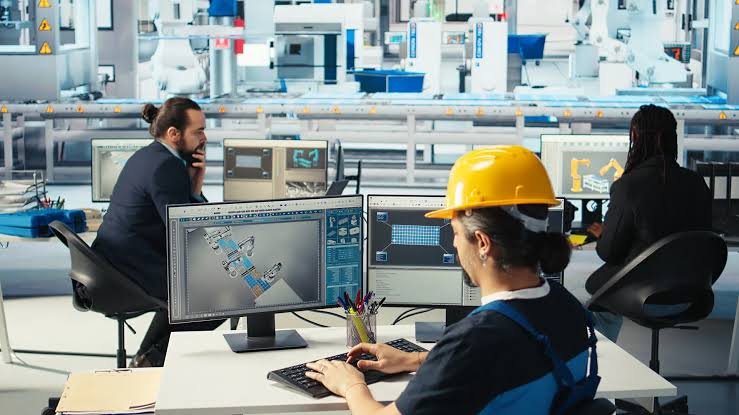
Graphics performance matters as much as raw calculation. Engineers rotate, section and inspect full-ship 3D models in real time, often with piping, structure and outfitting visible together. A workstation that stutters during that inspection is not a minor annoyance; it is a bottleneck on every decision in the project.
Software Ecosystems, Not Single Programs
No single application designs a ship. A typical ship design workflow chains specialised tools: surface modellers for hull geometry, hydrostatic programs for stability, CFD packages for hydrodynamics, finite-element suites for structure, and production systems that convert the approved model into cutting data for the yard’s machines. The craft lies in keeping those tools in agreement — geometry exported from one system must arrive in the next without losing the precision on which class approval depends.
That is why data standards and version control have become core skills in design offices. When fifty engineers edit the same vessel, the office needs the discipline software teams take for granted: controlled releases, change tracking and a single authoritative model that everyone can trust.
Automation and the Rise of Parametric Design
Repetitive work is steadily being automated away. Parametric models let an engineer change a principal dimension — lengthen the hull by two metres, say — and watch structure, hydrostatics and weight estimates update together. Scripts generate standard details, check rule compliance and produce first-pass arrangements for familiar vessel types, freeing senior architects for the problems that genuinely need experience.
Machine learning is beginning to assist at the edges: surrogate models trained on past simulation results can predict a new hull’s resistance in seconds, guiding designers toward promising shapes before expensive full simulations run. The human still signs the drawing, but the computer increasingly shortlists the options.
Read Also: How Tip Top Bet and Technology are Transforming Modern Sports in Ireland
Data as a Design Asset
Every completed project leaves behind a library of proven solutions, performance predictions and, increasingly, measured results from the delivered vessel. Offices that organise that data well start each new project standing on their own history rather than on memory. In an industry where a design may be built once and operated for thirty years, that accumulated, searchable knowledge is arguably the most valuable hardware of all — and it runs entirely on computers.
All of this computing power brings obligations that older design offices never faced. Models and calculations are now valuable intellectual property and safety-critical records at the same time, so backup discipline, access control and long-term file readability matter enormously. A stability model may need to be reopened twenty years after delivery for a conversion study; if the software has vanished or the files are unreadable, the knowledge effectively vanishes with them. Leading offices therefore archive neutral-format exports alongside native files, document their calculation assumptions, and treat data governance as part of professional engineering rather than office housekeeping. Cybersecurity belongs on the same list, since design networks hold commercially sensitive fleet plans. The picture that emerges is of a profession that still answers to physics, class rules and the sea — but now does much of its thinking through screens, servers and simulations, and is better for it when the digital discipline is taken seriously.