
From LOI to Closing Table: Turning Environmental Records into Early-Warning Signals with Analytics

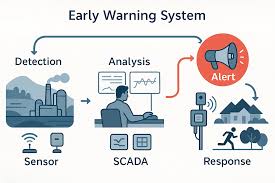
You just signed the Letter of Intent, and the clock is officially ticking. In the high-stakes world of commercial real estate, this is where the adrenaline hits because you are no longer just looking at a pretty rendering or a spreadsheet of projected rents. Now, you are hunting for the “deal killers” hidden beneath the topsoil. To truly protect your investment with an environmental site assessment, you need to move beyond the old-school way of checking boxes. We are living in an era where data is the new dirt, and if you aren’t using analytics to scrub through historical records, you are basically flying blind into a closing.
The Digital Evolution of Due Diligence
For decades, environmental due diligence was a paper-heavy slog. An engineer would head to a dusty basement, pull old city directories, and look at grainy black-and-white aerial photos from the fifties. It was manual, slow, and prone to human oversight. Today, the tech stack has completely shifted the landscape. We are now seeing the integration of Geographic Information Systems (GIS) and massive relational databases, enabling cross-references of thousands of properties in seconds.
Instead of waiting weeks for a manual search, modern platforms use machine learning to scan regulatory databases for “open” cases or nearby historical spills. This isn’t just about speed; it is about pattern recognition. Analytics can now flag a dry cleaner that was three blocks away in 1974 and predict the likelihood of a chemical plume migrating toward your specific parcel using groundwater flow models. This level of foresight turns a reactive report into a proactive shield.
Turning Raw Data into Predictive Intelligence
When you order an environmental site assessment, you are essentially buying a history book of the land. But a book is only useful if you can interpret the subtext. Advanced analytics allow us to layer data points such as soil composition, historical land use, and the current regulatory climate to create a risk profile.
Think of it as a “heat map” for liability. If the data shows a high density of industrial activity upgradient from your site, the software can trigger an early warning before a single borehole is drilled. This allows developers to pivot their strategy early. Maybe you renegotiate the price based on potential remediation costs, or maybe you walk away before you spend $50,000 on Phase II testing. Using technology to filter the noise means you focus your budget on the risks that actually matter.
Integration with the Closing Timeline
The most stressful part of any deal is the final push toward the closing table. Lenders are notorious for asking “what if” questions at the eleventh hour. When your environmental records are digitized and backed by robust analytics, you have the answers at your fingertips. You can show a lender a digital model of the site that accounts for vapor intrusion risks or historical tank removals with documented closure letters.
Cloud-based collaboration tools also mean that the buyer, the environmental consultant, and the legal team can all view the same live data. There is no more confusion over which version of a PDF is the “final” one. This transparency speeds up the approval process and keeps the title company happy. By treating environmental data as a dynamic asset rather than a static report, you ensure that the path from LOI to the closing table is paved with facts rather than assumptions.
Using Tech to Outpace the Competition
In a competitive market, speed is a currency. If you can vet a property’s environmental health in forty-eight hours while your competitor takes two weeks, you win. We are seeing more firms adopt “desktop” analytics tools that provide a high-level risk score before they even submit an offer. This allows for a “fail fast” mentality. If the tech flags a major red flag, like a Superfund site boundary overlap or a massive unrecorded landfill, you save your team months of wasted effort.
The goal here isn’t to replace the boots-on-the-ground expertise of an environmental professional. Instead, it is about giving those professionals better tools to find the needle in the haystack. When human intuition is paired with high-speed data processing, the result is a much clearer picture of what lies beneath the surface.
Read Also: Revolvertech .Com: Revolvertech.Com: the Future of Digital Technology
Final Thoughts on Smarter Investing
Navigating the transition from a signed LOI to a successful closing requires more than just a sharp eye for real estate; it requires a tech-forward approach to risk management. By leveraging modern analytics and digitized historical records, you turn potential liabilities into manageable data points. This strategy ensures that you aren’t blindsided by hidden costs three years down the line. Always remember that the best way to protect your investment with an environmental site assessment is to ensure that the data driving that assessment is as sophisticated as the deal itself.