
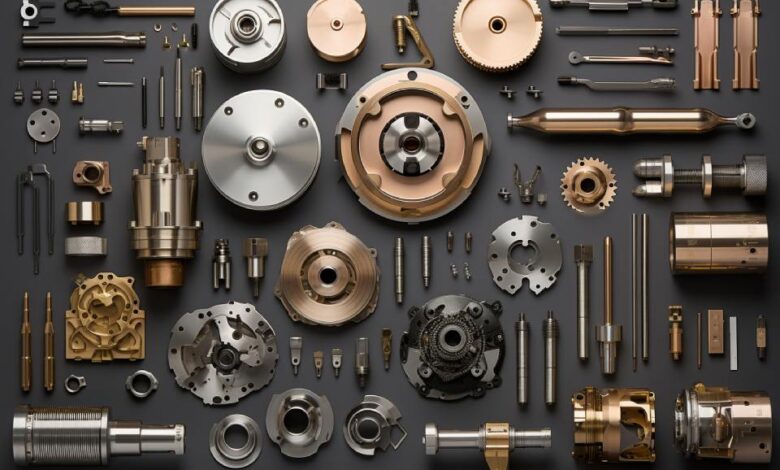
Every piece of technology we use daily—from the smartphone in your pocket to the electric vehicle in your driveway—is held together by components so small they’re easy to overlook. Yet these humble fasteners, the bolts, nuts, and screws that secure our devices, have undergone a quiet revolution. As technology shrinks and performance demands intensify, the precision required to manufacture these tiny but critical parts has reached extraordinary levels.
This evolution matters to anyone who relies on modern electronics, automotive systems, or medical devices. Because when a fastener fails, technology fails. Understanding how these components are made, and who makes them well, offers insight into the quality and reliability of the products we use every day.
The Hidden Complexity of a Simple Bolt
Consider the humble bolt securing the battery pack in an electric vehicle. It must withstand constant vibration, extreme temperature cycles, and the corrosive environment of road chemicals—all while maintaining perfect clamping force for the vehicle’s ten-year design life. That seemingly simple piece of metal is actually a sophisticated engineered component.
The demands on fasteners in modern electronics are even more extreme. A screw securing the camera module in a smartphone measures barely one millimetre in diameter. Its threads must be cut with such precision that the fit feels smooth to human touch yet holds securely against shock and vibration. The difference between a phone that rattles after six months and one that feels solid for years often comes down to the quality of its internal fasteners.
This is where precision machining enters the picture. Producing fasteners at this scale and accuracy requires equipment capable of holding tolerances measured in microns—thousandths of a millimetre. Companies like precision fastener manufacturers have developed specialised expertise in exactly this kind of work, combining advanced CNC Swiss lathes with decades of metallurgical knowledge to produce components that meet the most demanding specifications.
Why Materials Matter More Than Ever
The choice of material for a given fastener profoundly affects the performance of the final product. In consumer electronics, weight is critical, so titanium and aluminium alloys increasingly replace stainless steel. In medical devices, biocompatibility dictates material selection—the titanium bone screws used in spinal surgery must be absolutely non-reactive with human tissue. In automotive applications, the shift toward electrification brings new requirements for fasteners that can handle high voltages and resist galvanic corrosion when joining dissimilar metals.
Working with these advanced materials requires manufacturing processes tailored to their unique properties. Titanium, for example, is notoriously difficult to machine. It work-hardens rapidly, generates intense heat at the cutting edge, and can gall or seize if cutting parameters drift by even a small margin. Machinists who have spent years developing the right feeds, speeds, and tool geometries for titanium bring value that goes far beyond simply operating a machine.
The Electric Vehicle Revolution and Its Fastener Demands
The automotive industry’s transition to electric vehicles represents perhaps the most significant shift in fastener requirements in decades. Electric powertrains eliminate thousands of moving parts found in internal combustion engines, but they introduce new assemblies—battery packs, power electronics, electric motors—each with unique fastening challenges.
Battery packs alone can contain hundreds of fasteners, each critical to maintaining compression on the cells, ensuring electrical isolation, and surviving crash loads. These fasteners must be manufactured to exacting standards, with features like serrated flanges that prevent loosening under vibration and coatings that resist the corrosive effects of battery electrolytes. The precision required has pushed many automakers to seek suppliers with dedicated automotive specialty fasteners expertise, capable of delivering consistent quality across millions of parts annually.
Beyond the battery, electric vehicles incorporate advanced driver assistance systems (ADAS) with sensors that must remain perfectly aligned over years of driving. The fasteners securing these sensors cannot creep or relax, or the calibration that enables autonomous features could drift. This level of reliability demands both sophisticated design and manufacturing precision that only experienced suppliers can provide.
The Connection Between Fastener Quality and Product Experience
End users rarely think about fasteners, but they experience the consequences of fastener quality constantly. A laptop whose hinge loosens after a year, a smartphone whose screen develops a gap, a car whose interior rattles on rough roads—all of these common frustrations trace back to fasteners that weren’t quite right.
Conversely, products that maintain their integrity over years of use almost invariably incorporate well-designed, precisely manufactured fasteners. This reliability builds brand trust and customer loyalty in ways that are difficult to quantify but impossible to fake. When a manufacturer invests in quality fasteners, that investment pays returns throughout the product’s lifecycle.
For engineers and procurement professionals specifying fasteners for new products, the choice of manufacturing partner matters enormously. The right partner brings not only production capacity but design insight, suggesting modifications that improve manufacturability without compromising function. They understand the subtle interactions between material choice, thread geometry, and surface finish that determine how a fastener will perform in real-world conditions.
See also: Affordable Technology for Small Businesses: Leveling the Playing Field
Looking Ahead: Fasteners in an Increasingly Precise World
As technology continues its trajectory toward miniaturisation and integration, the demands on precision fasteners will only increase. We’re already seeing fasteners with features measured in tenths of millimetres, threads so fine they’re barely visible to the naked eye, and materials that would have been considered unmachinable a generation ago.
The companies that thrive in this environment will be those combining advanced manufacturing technology with deep process knowledge and rigorous quality systems. They will work collaboratively with customers, engaging early in the design process to ensure that components are optimised for both performance and production. And they will maintain the flexibility to move seamlessly from prototype quantities to high-volume production as products succeed.
For anyone involved in bringing new technology to market—whether as an engineer, a procurement specialist, or a business leader—understanding the capabilities of your supply chain partners is essential. The quality of the small parts that hold your product together ultimately determines the quality of the product itself. And in a competitive market, that distinction matters more than ever.